
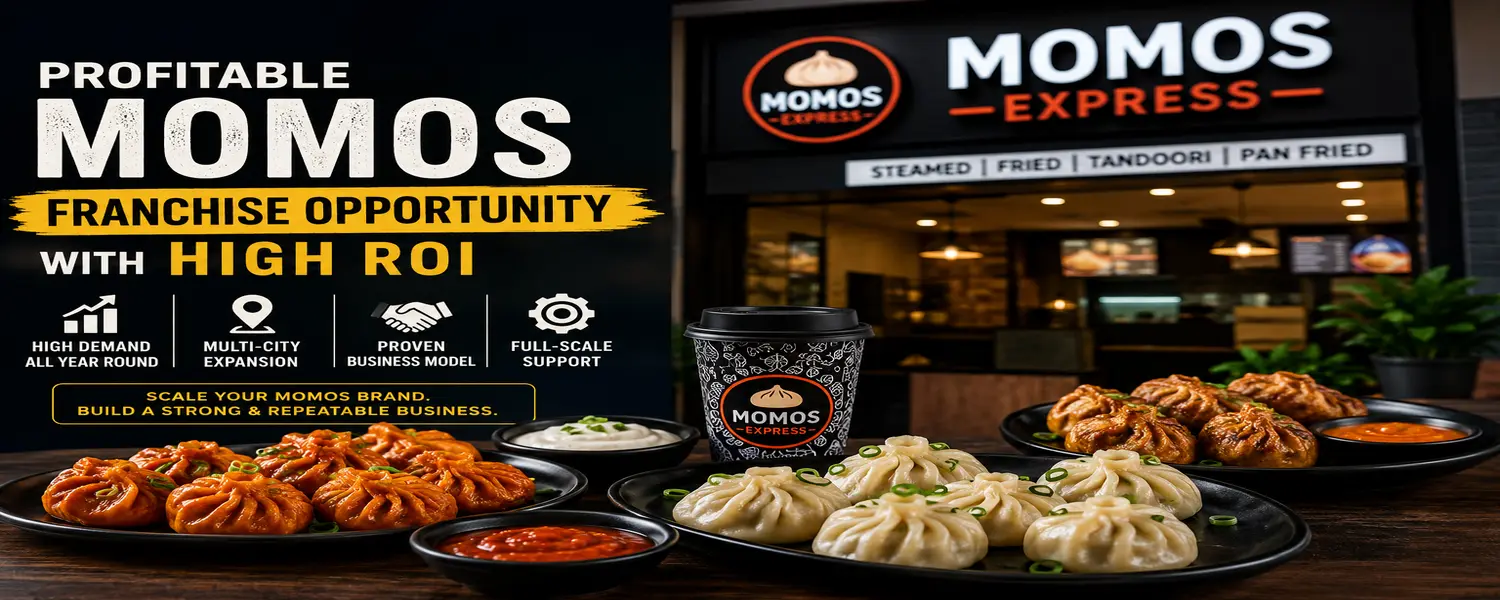
Profitable Momos Franchise Opportunity with High ROI
Scale Your Momos Brand Through Structured Franchise Expansion
The Indian quick-service restaurant ecosystem has evolved rapidly over the last decade, but very few categories have demonstrated the aggressive scalability, urban adaptability, and operational flexibility of the momos segment. What started as a niche street-food category has now become a mainstream organized food business with strong potential for multi-location expansion.
For food business owners, cloud kitchen operators, café founders, and regional QSR brands, the real opportunity today is not merely operating one successful outlet it is building a scalable franchise-ready system that can expand across cities with consistency, operational control, and long-term brand value.
This is where structured franchise development becomes critical.
At Strategizer, a business consulting and franchise consulting firm with 26+ years of combined industry experience, 1500+ business consultations, and 210+ brands successfully franchised, the focus is not on selling franchise deals. The focus is on helping brands create scalable expansion systems that support sustainable business growth.
Whether you operate a standalone momo outlet, a modern QSR chain, a café hybrid concept, or a cloud kitchen model, franchising can become a powerful growth engine when executed strategically.
Ready to Explore Franchise-Led Expansion?
Brands that scale successfully through franchising rarely do it through guesswork. They scale through systems, SOPs, operational standardization, territory planning, franchise structuring, and growth strategy.
Strategizer helps food brands build expansion-ready franchise systems designed for long-term scalability and operational consistency.
Discuss your business expansion strategy with a franchise growth consultant and evaluate whether your momos business is ready for structured multi-location growth.
| Factor | Business Expansion Perspective |
|---|---|
| Expansion Model | Franchise-led QSR scaling |
| Scalability Potential | High in urban and semi-urban markets |
| Operational Complexity | Moderate with proper SOP systems |
| Brand Replication Potential | Strong for standardized menus |
| Multi-City Expansion Suitability | High |
| Franchise Readiness Requirement | Strong operational systems needed |
| Ideal Business Stage | Brands with proven outlet success |
| Risk Level | Moderate without structured consulting |
| Growth Potential | Significant for organized food brands |
Food brands planning structured franchise growth require strong SOPs, operational consistency, and scalable outlet systems to expand successfully across multiple cities.
Key Takeaways
- Momos brands are highly adaptable to kiosk, dine-in, takeaway, and cloud kitchen formats.
- Franchise expansion works best when recipes, operations, and unit economics are standardized.
- Demand growth is strongest in urban youth-driven food markets.
- Multi-location expansion requires systems, not just product popularity.
- Structured franchise consulting significantly reduces scaling mistakes.
What Is a Profitable Momos Franchise Opportunity from a Business Expansion Perspective?
A profitable momos franchise opportunity is not about selling franchise units aggressively. It is about creating a repeatable business model that can be successfully operated across multiple locations while maintaining product consistency, operational quality, customer experience, and brand identity.
For food entrepreneurs and restaurant brands, franchising becomes a strategic expansion mechanism rather than a funding mechanism.
Why Momos Brands Are Naturally Scalable
Momos as a category have several characteristics that make them suitable for franchise-led growth:
1. Simple Operational Structure
Compared to full-scale restaurants, momo-focused QSR brands typically operate with:
- Smaller kitchen footprints
- Limited cooking complexity
- Faster service cycles
- Easier staff training
- Lower inventory complexity
This makes operational replication easier across locations.
2. Strong Urban Demand
The category has moved beyond street-food positioning into:
- Premium QSR concepts
- Café integrations
- Fusion food menus
- Cloud kitchens
- Mall kiosks
- College-focused quick-service formats
The consumer base spans students, working professionals, delivery-first audiences, and evening snack markets.
3. High Menu Adaptability
Modern momos brands are no longer restricted to steamed variants. Successful scalable brands often integrate:
- Fried momos
- Tandoori momos
- Pan-fried variations
- Fusion sauces
- Combo meals
- Beverage integrations
- Indo-Chinese menu extensions
This flexibility increases average order value and location adaptability.
According to the National Restaurant Association of India (NRAI), India’s organized food service and QSR ecosystem continues to experience rapid structural growth driven by urban consumption and delivery-first behavior.
Why Business Owners Are Choosing Franchise-Led Expansion
Many independent food businesses eventually reach a growth bottleneck.
The common challenge is this:
“How do we expand without losing operational control?”
Franchising solves this challenge when structured correctly.
Government-backed entrepreneurial initiatives and ecosystem support platforms like Startup India have also contributed to stronger interest in scalable business expansion models across India.
| Expansion Factor | Self-Owned Expansion | Franchise Expansion |
|---|---|---|
| Capital Burden | High | Shared |
| Operational Reach | Slower | Faster |
| Geographic Expansion | Limited | Wider |
| Local Market Penetration | Moderate | Strong |
| Growth Speed | Controlled | Accelerated |
| Scalability Potential | Medium | High |
| Expansion Risk | Fully Internal | Distributed |
For momos brands specifically, the low-to-moderate outlet complexity makes franchise-led scaling even more effective.
Brands that scale sustainably usually follow a structured business expansion strategy rather than aggressive uncontrolled outlet growth.
Market Insights: Why Momos Brands Are Scaling Rapidly
The Indian QSR industry continues to grow due to:
- Urbanization
- Delivery-first consumer behavior
- Affordable fast-food demand
- Youth-centric dining culture
- Digital ordering ecosystems
- Mall and high-street retail growth
Within this landscape, momos have evolved into a mainstream fast-food category with strong repeat demand.
Consumer Behavior Is Driving Expansion
Modern consumers increasingly prefer:
- Fast-serving food concepts
- Affordable meal formats
- Snack-based ordering
- Delivery-compatible products
- Flavor experimentation
Momos fit all these trends effectively.
Industry reports from Statista Food Service Industry Reports continue to show rising demand for quick-service dining, food delivery convenience, and youth-driven consumption trends.
What Makes the Category Attractive for Expansion?
Delivery Efficiency
Momos travel relatively well compared to many food categories. This supports:
- Swiggy/Zomato growth
- Cloud kitchen models
- Hybrid dine-in + delivery systems
Compact Outlet Models
Brands can scale through:
- Kiosks
- Food courts
- Small-format QSRs
- Delivery kitchens
- High-street takeaway counters
This reduces expansion friction.
Youth Market Dominance
College zones, tech corridors, malls, and commercial districts continue to create demand clusters ideal for rapid expansion.
Why Most Food Brands Fail at Scaling
Many food brands assume that one successful outlet automatically means franchise readiness.
That assumption causes major expansion failures.
Common Reasons Scaling Fails
Lack of SOP Standardization
Without operational documentation:
- Food quality varies
- Customer experience becomes inconsistent
- Staff dependency increases
- Franchise conflict emerges
Weak Unit Economics
Some brands scale before validating:
- Outlet profitability
- Operational sustainability
- Delivery margins
- Rent viability
- Staff cost management
No Franchise Structure
Many brands expand without:
- Territory planning
- Franchise agreements
- Training systems
- Vendor networks
- Supply-chain controls
This creates chaotic growth.
Founder Dependency
If the business depends entirely on the founder’s daily presence, scaling becomes difficult.
Scalable brands build systems — not personality-driven operations.
What Separates Scalable Momos Brands from Non-Scalable Brands
Scalable Brands Typically Have:
Operational Repeatability
Every outlet delivers:
- Consistent taste
- Similar service quality
- Controlled preparation methods
Strong Brand Identity
Scalable brands develop:
- Recognizable branding
- Standardized customer experience
- Clear positioning
Menu Engineering
Successful scaling brands avoid oversized menus.
Instead, they optimize for:
- Fast preparation
- Strong margins
- Delivery efficiency
- Easy training
Expansion Infrastructure
Scalable brands invest early in:
- SOP creation
- Franchise systems
- Staff training frameworks
- Procurement processes
- Quality audits
Franchise Development Services for Momos Brands
Franchise expansion is not a single process. It is a multi-layered business transformation that requires structured franchise development consulting for long-term scalability.
Strategizer helps brands move from “successful local business” to “structured scalable franchise brand.”
Business Expansion Consulting
Expansion consulting focuses on evaluating whether the business is genuinely ready for scaling.
Areas Covered
- Market positioning analysis
- Outlet performance evaluation
- Scalability assessment
- Competitive analysis
- Expansion model selection
This prevents premature franchising.
Franchise Development Strategy
A strong franchise structure protects both growth and operational consistency.
Strategic Development Includes
- Franchise model design
- Territory strategy
- Unit economics structuring
- Brand licensing frameworks
- Franchise support architecture
The goal is sustainable expansion not uncontrolled outlet growth.
SOP and System Development
One of the biggest reasons franchise brands fail is inconsistency, which is why structured SOP development services become critical before multi-location expansion.
Strategizer helps create:
- Kitchen SOPs
- Staff training systems
- Hygiene processes
- Customer service frameworks
- Vendor management systems
- Inventory procedures
This creates operational predictability.
Food brands expanding through franchising must also standardize hygiene and compliance procedures aligned with FSSAI operational guidelines to maintain consistency across locations.
Franchise Rollout Strategy
Expansion without rollout planning creates operational collapse.
| Expansion Component | Strategic Purpose |
|---|---|
| Territory Planning | Avoid outlet cannibalization |
| Cluster Expansion | Strengthen regional operations |
| Training Systems | Ensure consistency |
| Supply Chain Design | Protect product quality |
| Franchise Support Systems | Improve retention |
| Performance Audits | Maintain standards |
A structured rollout strategy ensures controlled growth.
Step-by-Step: How Strategizer Helps Momos Brands Expand
Step 1: Business Scalability Assessment
The first stage evaluates whether the business is actually franchise-ready.
Key Evaluation Areas
- Revenue consistency
- Product repeatability
- Operational dependency
- Menu scalability
- Brand positioning
- Market demand
Not every successful outlet is ready for franchising.
Step 2: Expansion Strategy Blueprint
Once readiness is validated, a structured expansion roadmap is created.
This Includes
- Expansion vision
- City prioritization
- Growth sequencing
- Format selection
- Revenue projections
- Operational scaling strategy
This transforms random expansion into strategic growth.
Step 3: Franchise System Development
The franchise infrastructure is built.
Deliverables Often Include
- Franchise documentation
- SOP manuals
- Brand guidelines
- Operational frameworks
- Compliance processes
- Training structures
This becomes the foundation for scale.
Step 4: Market Positioning and Brand Structuring
A scalable brand requires stronger positioning than a local outlet.
Strategizer helps brands strengthen:
- Market identity
- Customer perception
- Expansion messaging
- Brand architecture
Strong positioning improves franchise scalability.
Step 5: Expansion Execution Support
Expansion is monitored strategically rather than left unmanaged.
Support Areas
- Rollout planning
- Operational optimization
- Franchise onboarding
- Growth consulting
- Multi-location management systems
This improves long-term expansion sustainability.
Franchise Readiness Checklist for Momos Brands
Your Brand May Be Ready for Franchising If:
Operational Indicators
- Your outlet generates consistent revenue
- Recipes are standardized
- Staff training is manageable
- Operations can run without founder presence
Brand Indicators
- Customers recognize your brand
- Repeat business is strong
- Menu positioning is clear
- Delivery performance is stable
Expansion Indicators
- Multiple locations are feasible
- Demand exists outside your current market
- Systems can be replicated
- Vendor sourcing is scalable
| Expansion Model | Best For | Advantages | Challenges |
|---|---|---|---|
| Self-Owned Expansion | Premium Brands | Full Control | High Capital Requirement |
| Franchise Expansion | Growth-Focused Brands | Faster Scaling | Needs Systems |
| Cloud Kitchen Expansion | Delivery-Focused Brands | Lower Setup Cost | Branding Limitations |
| Hybrid Expansion | Modern Scalable Brands | Flexible Growth | Complex Management |
| Master Franchise Model | Multi-City Scaling | Rapid Regional Growth | Higher Coordination |
The right model depends on the business stage, operational maturity, and expansion goals.
Case Study: From Single Outlet to Multi-Location Brand
Challenge
A regional fast-food business specializing in momos and Indo-Chinese snacks experienced strong customer demand in one city but struggled to scale.
Core Problems
- Founder-driven operations
- No SOP documentation
- Inconsistent kitchen processes
- Weak expansion planning
- Lack of franchise structure
The brand initially attempted direct expansion but faced operational inconsistency.
Strategy Implemented
A structured franchise development framework was introduced.
Key Changes
- Standardized kitchen workflows
- Optimized menu engineering
- Developed franchise SOPs
- Created training systems
- Introduced territory-based rollout planning
The focus shifted from “opening more outlets” to “building a scalable business system.”
Outcome
Over time, the brand achieved:
- Multi-location operational consistency
- Faster onboarding processes
- Improved customer experience
- Stronger expansion confidence
- Better unit-level operational control
The most important transformation was not outlet count it was scalability readiness.
Strategic Advisory: When Should a Momos Brand Franchise?
Timing matters significantly in franchise expansion.
India’s expanding food processing and organized retail ecosystem, highlighted by Invest India Food Processing Sector Insights, continues to create favorable conditions for scalable QSR and franchise-led growth models.
Brands Should Consider Franchising When:
The Business Model Is Proven
A business should demonstrate operational consistency before expansion.
Systems Are Replicable
If operations depend entirely on founder supervision, franchising becomes risky.
Market Demand Exists Beyond One Location
Expansion should be demand-driven, not emotionally driven.
Operational Margins Are Sustainable
Weak unit economics become magnified during scaling.
Common Mistakes Food Brands Make During Franchise Expansion
Expanding Too Early
Many brands scale after one successful outlet without validating:
- Operational systems
- Market adaptability
- Staff scalability
This creates unstable growth.
Ignoring Process Documentation
Without SOPs:
- Customer experience becomes inconsistent
- Franchise conflict increases
- Brand reputation weakens
Oversized Menus
Complex menus slow down operations and increase training challenges.
Scalable QSR brands optimize simplicity.
Weak Franchise Support
Franchise partners require:
- Training
- Operational guidance
- Audit systems
- Vendor coordination
Poor support damages long-term brand growth.
Choosing Growth Over Sustainability
Aggressive expansion without infrastructure often leads to:
- Operational breakdowns
- Quality decline
- Brand dilution
Sustainable growth is more valuable than rapid uncontrolled expansion.
Expansion Readiness Decision Table
| Business Condition | Franchise Readiness Level |
|---|---|
| One outlet with unstable operations | Low |
| Stable revenue but founder-dependent | Moderate |
| Multiple successful outlets | High |
| SOP-driven operations | High |
| Strong delivery + dine-in balance | High |
| Recognizable regional branding | High |
| No operational documentation | Low |
Why Structured Franchise Consulting Matters
Franchise expansion is not only about growth.
It is about protecting the business while scaling.
Professional consulting helps brands avoid costly mistakes such as:
- Poor expansion sequencing
- Weak franchise structures
- Territory conflicts
- Operational inconsistency
- Brand dilution
Strategizer works as a long-term growth and expansion partner rather than a transactional consultant.
With 26+ years of combined industry experience, 1500+ business consultations, and 210+ successfully franchised brands, the consulting approach focuses on structured, scalable business growth.
Why Businesses Work with Strategizer
Deep Business Consulting Experience
Strategizer combines operational understanding with franchise growth expertise.
This includes:
- Franchise strategy
- Expansion consulting
- System development
- Operational scaling
- Brand structuring
Proven Exposure Across Industries
Working with hundreds of businesses provides deeper insight into:
- Scalability patterns
- Growth bottlenecks
- Operational risks
- Market positioning challenges
Structured Expansion Thinking
Many consultants focus only on franchise sales.
Strategizer focuses on:
- Long-term scalability
- Brand sustainability
- Operational consistency
- Expansion architecture
This creates stronger business foundations.
Build a Scalable Momos Brand with Strategic Franchise Consulting
If your food business has already validated customer demand, the next stage is building systems that support sustainable multi-location expansion.
Strategizer helps brands:
- Evaluate franchise readiness
- Build scalable operational systems
- Structure franchise frameworks
- Create expansion roadmaps
- Develop long-term growth strategies
The objective is not simply opening more outlets.
The objective is building a scalable brand.
Specialized food franchise consulting helps restaurant and QSR brands standardize operations, improve scalability, and expand with stronger operational control.
Momos Franchise Opportunities in India – FAQs
List top momos franchise opportunities available in India.
What is the Wow! Momo franchise cost in India?
How do different momos franchise models compare?
How many momos are typically there in 1kg?
What business can I start with ₹5 lakhs in India?
What makes a food brand scalable?
Scalable brands usually have:
- Operational simplicity
- Strong demand
- Repeatable systems
- Clear branding
- Sustainable margins
- Efficient training processes
Final Strategic Insight
The future of food business expansion belongs to brands that can combine operational efficiency with scalable systems.
The momos category offers strong expansion potential, but successful scaling requires more than product popularity. It requires structure, process standardization, operational strategy, and disciplined franchise development.
For business owners and food brands planning long-term growth, franchising can become one of the most effective expansion models when executed with the right systems and consulting support.
Strategizer helps businesses transform from single-location operations into scalable franchise-ready brands through structured business consulting and franchise expansion strategy.
About Strategizer
Strategizer is a business consulting and franchise consulting firm focused on helping brands scale through structured expansion systems, franchise development strategies, operational frameworks, and long-term growth planning.
With 26+ years of combined industry experience, 1500+ business consultations, and 210+ brands successfully franchised, Strategizer supports businesses across multiple industries in building scalable growth models.